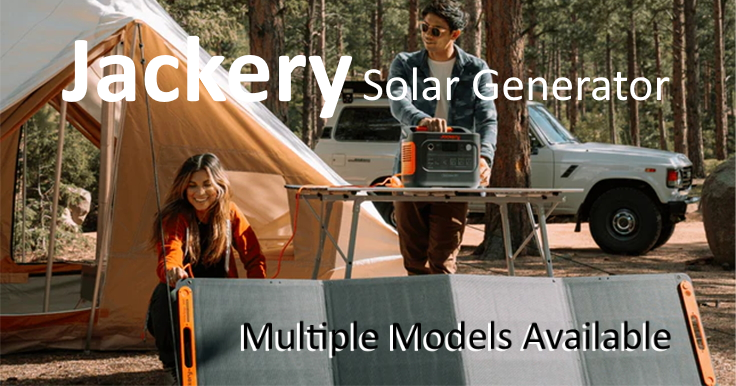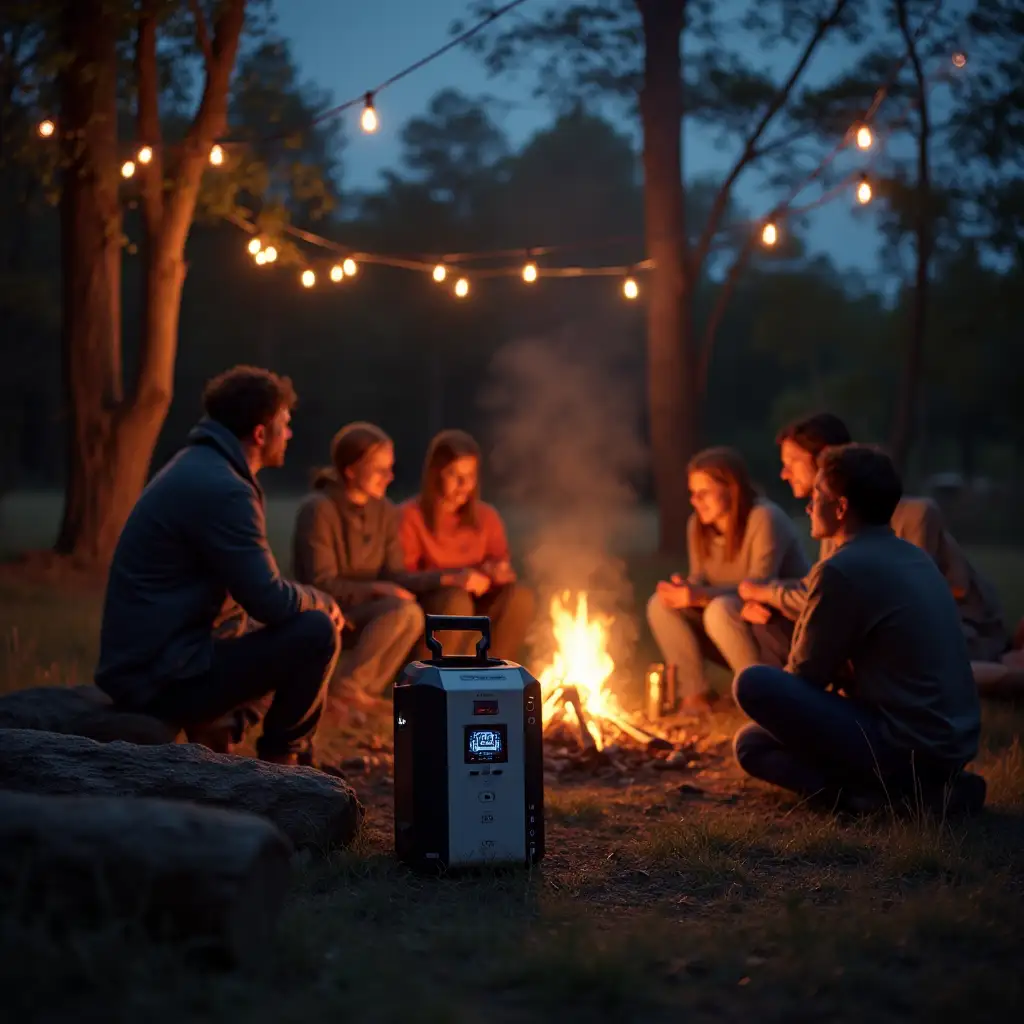
Portable solar power stations (PSPS) bundle a lithium battery, inverter, solar charge controller, and smart power management into a single, compact unit.
Compared to fixed rooftop or bulky piecemeal solar systems, PSPS are easier to deploy, safer to use, simpler to expand, and more cost efficient for many everyday and mobile scenarios like rentals, small businesses, events, and off-grid work.
The information provided here is ideal for readers comparing Jackery, EcoFlow, and similar portable solutions.
Quick ComparisonA portable solar power station is an all in one device that:
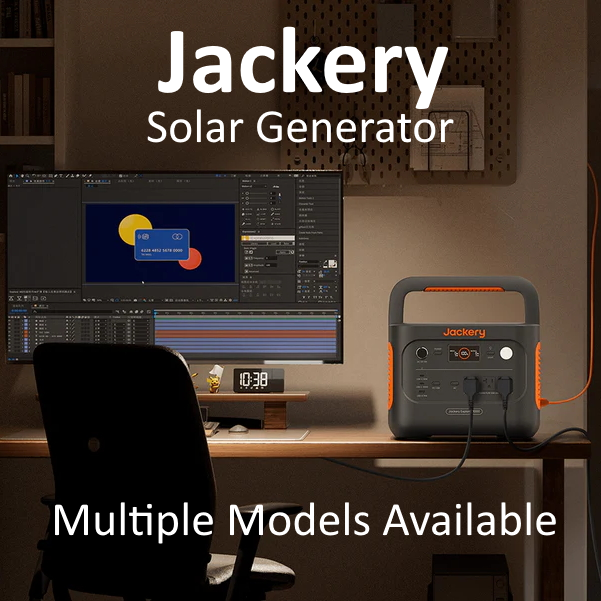
The right solar power setup for your off-grid lifestyle.
Load shedding & outages - Keep routers, phones, lights, and medical devices running for hours.
Remote work & content creation - Silent power for laptops, cameras, LED panels, drones.
Events & market stalls - Card machines, signage, lighting, small PA systems.
Travel & camping/overlanding - Refrigerators, induction cookers (short bursts), pumps, and lighting.
Emergency response - Rapidly deployable power for relief sites and field clinics.
Small workshops - Saws, drills, soldering irons (check surge/inrush requirements).
Get in Touch| Feature/Factor | Portable Solar Power Station | Fixed/Bulkier System |
|---|---|---|
| Installation | Tool free, plug and play | Professional install or advanced DIY |
| Mobility | Highly portable | Permanently mounted |
| Time to use | Minutes | Days to weeks |
| Upfront complexity | Low (all in one) | High (multiple components) |
| Scalability | Add panels or expansion batteries easily | Scalable but requires design changes |
| Ideal loads | Essential/home office/mobile gear | Whole home or high duty loads |
| Maintenance | Minimal | Regular inspections, wiring checks |
| Noise/Emissions | Silent, zero emissions | Silent (solar) but complex; fuel gens are noisy |
| Permits | Usually none | Often required for rooftop/structural |
| Resale/Relocation | Easy to sell or take with you | Hard to remove/reuse |
Start by first listing essentials and their watt draw (label or manual) as shown in this example:
Estimate daily energy: Wh = Device Watts x Hours Used (sum for all devices).
Add a buffer: multiply by 1.2-1.3 to account for inverter and conversion losses.
Pick capacity: Choose a station whose battery capacity (Wh) meets or exceeds your daily Wh.
Check inverter power (W): Ensure the station's continuous/surge ratings exceed your peak simultaneous load.
In regards to solar, there's free energy anywhere. Foldable panels (100-550W) pair well with PSPS. Angle toward the sun and avoid shading.
AC wall outlet offer the fastest top ups before a trip or impending outage.
Car charging (12/24V) utilize a trickle of charge while driving between sites.
If you need near continuous power, size solar input (W) so daily harvest ≥ daily use. As a rough start, Daily Solar Wh = Panel Watts x Peak Sun Hours x 0.7 (system losses)
Charging speed is a factor, where EcoFlow actually emphasizes ultra fast AC charging while Jackery is fast and very battery friendly. Check out their real world charge curves.
Battery chemistry is a primary factor and many modern units use LiFePO4 (longer cycle life, stable) while some older/ultra compact units use NMC (higher energy density).
When considering inverter capability, look at continuous and surge (peak) watts; appliances like fridges and pumps have inrush.
Ports & ecosystem is a desirable aspect, things like USB Type-C PD outputs, RV ports, expansion batteries, smart add ons like 12V kits, extra panels, and smart generators.
When talking about portability, weight & ergonomics will depend entirely on your use case. But worry not, most PSPS come with wheels, handles, stackability options if you move your PSPS that often.
App & firmware is considered ideal where remote monitoring, UPS/transfer times, and customization can be decisive.
And of course, that warranty & support. Unsure you prioritize established support networks in your country/region.
If you like Jackery and EcoFlow, short list 1-2 models from each in the 1-2kWh range (for home office/back up) or 2-4kWh (for heavy campers/small fridges/power tools). Pair with 200-400W of portable panels per kWh for balanced solar replenishment.
Portable stations aren't a silver bullet. For whole home electrification, high duty appliances (geysers, ovens, HVAC), or permanent net metering, a rooftop system with a large battery may be more economical per kWh.
Choose fixed/bulkier if:
Choose portable if:
"Portable = toy power ?!" Not correct; Modern PSPS can deliver 1-3kW continuous with multi kWh storage; more than enough for essentials and power tools.
"Solar is too slow ?!" Big misconception; With 400-800W of panels and fast AC pre charge, you can cycle daily for typical home office loads.
"Setup is complicated ?!" LOL; If you can plug in a laptop charger, you can as well set up a PSPS.
Before investing in a portable solar power station, keep these key points in mind:
Make a list of your must-power devices (with watt ratings) before you shop. This avoids under-sizing or overspending.
Looking to simplify your shopping experience? Here's a clear breakdown of ready made bundles. Each package pairs a portable solar power station with the right sized panels, so you know exactly what you're getting and what it's good for.
Yes, but it's crucial to check both the continuous and surge watt ratings of the power station. Many modern 1-2kWh stations can comfortably handle the power requirements of typical home refrigerators.
The runtime is calculated as: Runtime = Battery Watt-hours (Wh) / Your Device's Wattage (W) x 0.85 (to account for energy conversion efficiency). For example, a 1200Wh station powering a 100W device will last approximately 10.2 hours.
Absolutely. Many leading brands like EcoFlow, Jackery, and Bluetti design their ecosystems to be modular. You can often add expansion batteries to increase storage capacity or connect multiple units together.
Yes, portable power stations are perfectly safe for indoor use as they produce no emissions or fumes. Just ensure that the ventilation fans are not obstructed to allow for proper cooling.
While using panels from the same brand is the simplest plug-and-play option, you can often use third-party panels. However, you must ensure their voltage and current are within the power station's specified input limits to avoid damage.
For most people who need reliable, flexible power (not a full rooftop rebuild) portable solar power stations deliver the best convenience to capability ratio. With brands like Jackery and EcoFlow, you get fast setup, smart safety features, and room to grow. Start with a right sized station, pair it with portable panels, and you'll have clean, quiet power wherever life takes you.
Choose the bundle that fits your needs; whether it's Everyday Backup, Home Office, or Mobile Pro, start enjoying clean, portable energy today. Need help sizing? Our team can match you with the perfect Jackery or EcoFlow solution tailored to your usage patterns.
Get a Quote